
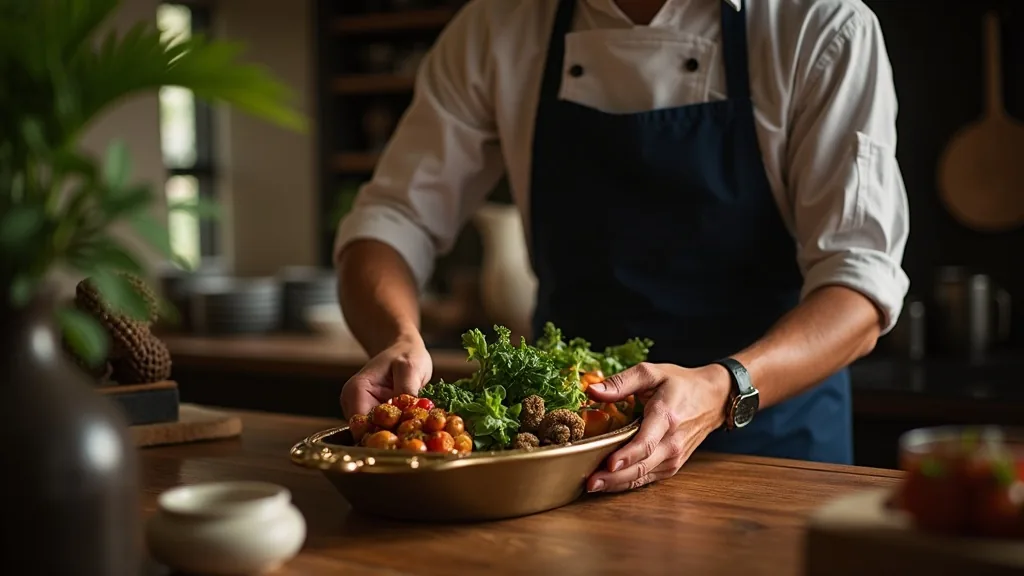
A properly vetted private chef in Bali should hold verifiable food-hygiene training, cook only with ingredients from audited suppliers, and work to written allergy and cold-chain protocols — and as of 2026, indicative pricing starts around USD 25–50 per person per meal for a standard private chef service, rising to USD 80–150+ per person for a degustation-level villa dinner, with groceries usually billed separately. Private villa chef food safety in Bali is not regulated the way a licensed restaurant kitchen is, which is precisely why vetting matters: a villa kitchen is a private space, and the standard inside it is only as good as the operator who staffed it. This guide explains how experienced concierge operators certify and vet chefs, where trusted ingredients actually come from, how allergies are managed, and what a realistic budget looks like.
How Are Private Villa Chefs in Bali Certified and Vetted?
There is no single government licence that a guest can simply ask to see, so serious operators build their own vetting stack. When we place chefs through our private chef and villa staffing service, the screening covers four layers before a chef ever enters a client villa:
- Verifiable training and hygiene credentials. We look for formal culinary schooling or documented hotel-kitchen experience, plus food-handler and hygiene training built on HACCP principles — the hazard-control framework used across international hospitality. A chef who has run a section in a five-star resort kitchen has worked under daily temperature logs, colour-coded boards, and audit culture; that habit transfers to villa work.
- Reference-checked employment history. We call previous employers directly — resorts, established villas, yacht galleys — rather than relying on a CV. Bali’s hospitality community is small enough that reputations are checkable, and we use that.
- Practical trade test. Before joining our roster, a chef cooks a full service under observation: mise en place, raw and cooked separation, fridge organisation, hand-washing discipline, and how they handle a surprise dietary restriction announced mid-brief. Knife skills are easy to fake on a plate; hygiene habits under pressure are not.
- Ongoing supervision. Vetting is not a one-time gate. When we audit private villa chef food safety in Bali across our own placements, we spot-check fridge temperatures, storage practice, and supplier receipts — because standards drift when nobody is looking.
If you are hiring independently, ask for the same things: hygiene training certificates, two contactable references from professional kitchens, and a clear answer to “how do you keep raw chicken away from salad in a small villa fridge?” A confident, specific answer tells you more than any brochure.
Where Do Trusted Chefs Source Ingredients in Bali?
Sourcing is where villa dining quietly succeeds or fails. Bali has excellent produce — and also open-air markets where seafood sits in tropical heat. A professional chef maps every ingredient to a trusted channel:
- Highland organic produce. The Bedugul and Kintamani highlands supply Bali’s best vegetables, salads, and strawberries. Reputable chefs buy from established farm suppliers who harvest to order and deliver chilled, rather than from open stalls where cold chain is unknowable.
- Seafood direct from audited suppliers. For sashimi-grade fish, lobster, and prawns, the difference between a licensed seafood supplier with blast-freezing and ice-packed delivery versus a beach market purchase is the difference between a highlight dinner and a ruined holiday. Sashimi-grade means frozen to parasite-killing temperatures under controlled conditions — a market stall cannot certify that.
- Imported proteins and specialty goods. Wagyu, quality lamb, European cheeses, and charcuterie come through licensed importers with refrigerated distribution. As of 2026 these importers service the main villa corridors — Seminyak, Canggu, Uluwatu, and Nusa Dua — with scheduled chilled delivery, so there is no excuse for grey-channel product.
- Halal, organic, and specialty requirements. Guests who need halal-certified meat, certified-organic produce, or specific baby-food brands should raise it at booking stage. A connected operator can source nearly anything on the island given 48–72 hours of notice; sourcing it safely on the same afternoon is much harder.
Ask any prospective chef one revealing question: “Where will my seafood come from, and how does it travel?” A professional will name the supplier category and the cold-chain method without hesitating.
What Does Private Villa Chef Food Safety in Bali Actually Cover Day to Day?
Certificates matter, but daily discipline matters more. The weakest link in private villa chef food safety in Bali is usually the journey between supplier and villa fridge, and the hours that follow. A professionally run villa kitchen operates on rules a guest can actually observe:
- Cold-chain integrity. Chilled goods travel in cool boxes or refrigerated delivery, go straight into the fridge on arrival, and are never left on a counter “for a moment” in 30°C heat. Fridges are checked to hold below 5°C — villa fridges in tropical humidity often run warm, and a good chef verifies rather than assumes.
- Strict raw/cooked separation. Separate boards and knives for raw proteins, sealed containers on the lowest fridge shelf, and no thawing at room temperature — thawing happens overnight in the fridge or under cold running water.
- Time-and-temperature discipline. Cooked food is served promptly or held hot; buffet-style spreads left out through a long villa afternoon are the classic tropical mistake. Leftovers are chilled quickly, labelled, and discarded conservatively.
- Water and ice awareness. Drinking water, ice from sealed commercial supply, and produce washed appropriately — the basics that separate a professional operation from a casual cook.
- Personal hygiene and illness policy. A chef who is unwell does not cook, full stop. Operators with a roster can send a vetted replacement the same day; a lone freelancer often cannot afford to cancel, which is a structural risk worth understanding.
How Are Allergies and Dietary Requirements Handled?
For families travelling with serious allergies, protocol beats promises. The standard we hold our placements to — and recommend you demand anywhere — looks like this: allergies are documented in writing at booking, confirmed in the pre-arrival briefing, and re-confirmed by the chef in person on day one. For severe allergies (nuts, shellfish, gluten for coeliac guests), the chef works with dedicated prep surfaces and utensils, reads supplier labels rather than guessing, and keeps the allergen out of the villa entirely where possible. Cross-contamination through a shared fryer or chopping board is the failure mode; a trained chef designs the whole menu around avoiding it rather than “being careful.” Vegan, kosher-style, pregnancy-safe, and low-FODMAP briefs are handled the same way — written brief first, menu designed around it, no improvisation at the stove.
What Does a Private Villa Chef Cost Per Meal in 2026?
Indicative figures as of 2026, for guidance only — final quotes depend on group size, menu complexity, and season:
| Service level | Indicative price per person | Notes |
|---|---|---|
| Daily villa chef (breakfast/lunch/dinner) | USD 25–50 per meal | Chef fee plus groceries at cost with receipts |
| Premium single-event dinner | USD 60–100 | Multi-course, styled service at the villa |
| Degustation / fine-dining chef | USD 80–150+ | Resort-trained chef, wine pairing arranged on request |
Groceries are normally billed at cost with receipts provided — treat any arrangement where ingredient spending is opaque as a red flag. Expect premiums and earlier booking cut-offs during high season: July–August and the Christmas–New Year period see the strongest demand across Seminyak, Canggu, Uluwatu, and Nusa Dua, and the best chefs are reserved weeks ahead. If your trip includes a milestone celebration, pairing a villa chef with one of our curated fine dining experiences in Bali — a destination dinner one night, a private chef the rest of the stay — is the format most of our clients settle on.
Why Book Through an Established Operator?
Anyone can forward you a freelance chef’s Instagram. What an experienced concierge adds is accountability: vetted and reference-checked chefs, audited suppliers, written allergy protocols, same-day replacements if a chef falls ill, and a single point of contact if anything needs fixing mid-stay. We treat private villa chef food safety in Bali as non-negotiable infrastructure behind the experience — the guest should only ever notice the food.
Bali Luxury Concierge is part of Juara Holding Group — operating from Bali across Indonesia since 2015 — and villa dining is one piece of the full stay we manage, from airport fast-track to complete villa staffing. Tell us your dates, group size, and any dietary requirements, and we will propose vetted chef options with transparent per-meal pricing. Message our team on WhatsApp at +62 811-2859-0000 or email sales@balipremiumtrip.com — for July–August or the year-end holidays, reach out well in advance.