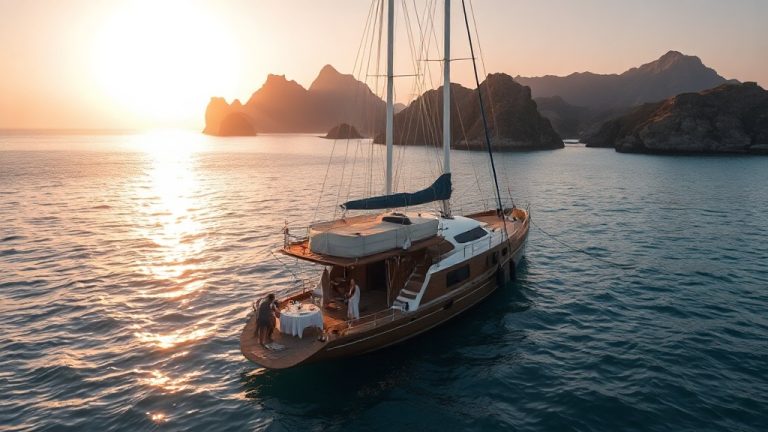

Yacht charter regulations in Indonesia rest on four pillars: flag and cabotage rules that decide which vessels may carry paying guests, arrival clearance for foreign-flagged yachts (the process long known as CAIT), correct documentation for every crew member and guest on board, and separate permits for protected marine parks such as Komodo and Raja Ampat. As of 2026, none of these steps is difficult in itself — but each is handled by a different authority, and a charter that begins before the paperwork is complete can be detained, fined, or turned back. This guide explains what the rules actually require, and where an experienced shoreside team earns its keep.
What Do Yacht Charter Regulations in Indonesia Actually Cover?
Indonesia is an archipelagic state of more than 17,000 islands, and its maritime law treats the waters between those islands as sovereign territory — not open sea. In practice, the rules a charter must satisfy fall into four layers:
- Flag and cabotage rules — which vessels may operate commercially in Indonesian waters at all.
- Entry and cruising clearance — permission for a foreign-flagged yacht to be in Indonesian territory, cleared through customs, immigration, quarantine, and the harbourmaster (the CIQP chain).
- People documentation — passports, visas, crew lists, and guest manifests that must match what is physically on board.
- Destination permits — national park entry fees, conservation charges, and local permissions for areas such as Komodo National Park and Raja Ampat.
Miss any single layer and the others do not protect you. That is why owners, captains, and charter brokers increasingly treat the paperwork as a project in its own right, started weeks before the guests’ flights are even booked.
Flag and Cabotage: Who May Legally Charter in Indonesian Waters?
The cornerstone of yacht charter regulations in Indonesia is the cabotage principle, anchored in the national Shipping Law (Law No. 17 of 2008). In plain terms: commercial carriage of passengers between points inside Indonesia is reserved for Indonesian-flagged vessels operated by Indonesian entities. This is the rule that catches out the most foreign owners.
What this means in practice:
- Indonesian-flagged charter vessels — including the phinisi fleets and locally registered motor yachts — may sell charters between Indonesian ports freely, provided their commercial licensing is in order.
- Foreign-flagged private yachts may cruise Indonesia for genuine private use under the entry-clearance regime described below, but they may not simply sell charters domestically as if they were local operators.
- Foreign-flagged charter arrangements exist in specific, structured forms — but they require professional legal and agency handling, and the details shift with regulation. This is precisely the area where guessing is most expensive: a “charter” that looks private on paper but commercial in substance exposes the owner, the captain, and the guests.
If you are a guest rather than an owner, the practical takeaway is simple: charter through vessels and operators whose flag status matches the trip they are selling, and ask directly how the charter is structured. A serious operator answers that question without hesitation.
What Is CAIT Clearance, and How Does It Work as of 2026?
CAIT — Clearance Approval for Indonesian Territory — is the permission a foreign-flagged yacht historically needed before entering Indonesian waters. The regime was substantially eased from 2015 onward (Presidential Regulation No. 105 of 2015 was the turning point), and as of 2026 the process for foreign pleasure yachts is handled electronically before arrival rather than through the slow paper approvals of the past.
The working sequence for a foreign-flagged yacht today looks like this:
- Pre-arrival electronic notification — vessel particulars, ownership, crew list, and intended itinerary submitted online before the yacht enters Indonesian waters.
- Arrival at a designated port of entry — Benoa in Bali is the natural gateway for most itineraries heading east toward Komodo and beyond, and the port where our own shoreside team does most of its clearance work.
- CIQP clearance on arrival — Customs (including the temporary-import status of the vessel itself), Immigration (every person on board), Quarantine/health, and the harbourmaster’s port clearance.
- Domestic port clearances — each subsequent leg of the cruise is cleared with the local harbourmaster, so the itinerary you declare should be the itinerary you sail.
Two honest caveats. First, procedures and portal requirements are refined regularly, so treat any blog post — including this one — as orientation, not gospel; your agent should confirm the current requirements against the actual authorities in the weeks before arrival. Second, timing matters: clearance during the July–August peak and the December–January holiday period takes longer simply because ports, marinas, and agencies are at capacity. Vessels arriving in high season should build in buffer days and book berths well ahead.
Crew and Guest Documentation: What Must Be On Board?
Immigration treats a yacht like any other conveyance: everyone on board must hold the right status, and the paperwork must match reality. The core set:
| Document | Applies to | Notes |
|---|---|---|
| Passport (6+ months validity) | All crew and guests | Checked at first port of entry and at park gates. |
| Visa or visa exemption | All crew and guests | Many nationalities can use e-visa or visa on arrival; longer refits or seasons need the correct longer-stay category. |
| Crew list | All working crew | Endorsed at clearance; changes mid-cruise must be reported. |
| Guest manifest | All guests | Must match the persons physically embarked — no informal additions at anchor. |
| Vessel papers | The yacht | Registry, insurance, and the customs status of the vessel while in Indonesia. |
The most common real-world failure is not a missing document but a mismatch: a guest who joined by domestic flight mid-itinerary and never made it onto the manifest, or a crew rotation done quietly in a fishing harbour. These are exactly the discrepancies spot checks find, and they turn a pleasant cruise into an administrative problem that follows the vessel.
Marine Park Permits: Komodo, Raja Ampat, and Other Protected Waters
Entry clearance gets the yacht into Indonesia; it does not get anyone into a national park. Komodo National Park, Raja Ampat, Banda, Wakatobi, and other protected areas each levy their own entry and conservation fees — typically charged per guest per day, with additional line items for diving, ranger escort on land visits, and vessel anchorage or mooring. Rates are revised periodically, so we deliberately do not print figures here; budget for park fees as a real line item and have your agent confirm current rates for your dates.
Practical points that surprise first-time visitors:
- Park permits are checked — ranger patrols in Komodo and Raja Ampat do stop vessels and ask for proof of payment.
- Land activities inside Komodo National Park require a licensed ranger; you do not walk to see dragons unescorted.
- Some areas restrict anchoring to protect reefs, so itinerary planning and permits go hand in hand.
If the itinerary itself is still taking shape, our exclusive island experiences page covers how we build the guest-facing side of an eastern Indonesia cruise — this article stays with the regulatory spine underneath it.
How Does a Shoreside Concierge Handle the Paperwork?
Because yacht charter regulations in Indonesia sit across several agencies — immigration, customs, quarantine, harbourmaster, park authorities — the practical solution used by experienced captains is a single shoreside point of contact who sequences all of it. In our superyacht shoreside concierge programme, that looks like:
- Pre-arrival — reviewing vessel and crew documents against current requirements, lodging electronic notifications, and booking berths at Benoa or the chosen port of entry before high-season capacity disappears.
- Arrival day — coordinating CIQP officials so clearance happens in hours, not days, while guests flying into Bali are met with VIP fast-track at Ngurah Rai airport and, where the movement justifies it, officially arranged police-escorted transfers to the marina.
- During the cruise — domestic port clearances for each leg, park permits paid and documented before the yacht reaches the gate, provisioning, fuel, and crew rotations handled with the manifest kept accurate throughout.
- Around the charter — the land side that owners and guests actually remember: premium villas in Uluwatu, Seminyak, or Nusa Dua before embarkation, restaurant reservations, security where required, and onward travel.
The value is not that any single form is hard. It is that twenty small tasks, each owned by a different office with its own hours and its own queue, become one accountable timeline.
Key Takeaways Before You Book
- Cabotage first: confirm the vessel’s flag and structure match the charter being sold.
- Foreign-flagged yachts clear in electronically as of 2026, but start the process weeks ahead — and add buffer in July–August and the year-end peak.
- Every person on board needs matching immigration status and a place on the crew list or manifest.
- Marine parks are a separate permit and a separate budget line; verify current fees for your dates.
- One shoreside coordinator beats five separate agents.
Indonesia’s rules reward preparation generously: yachts that arrive with clean paperwork experience one of the most open, spectacular cruising grounds on earth. Bali Luxury Concierge — part of Juara Holding Group, operating from Bali across Indonesia since 2015 — handles the clearance, permits, and land logistics for owners, captains, and charter guests end to end. Message our BD desk on WhatsApp (+62 811-2859-0000) or email sales@balipremiumtrip.com with your vessel details and intended dates, and we will map the exact clearance timeline for your cruise.